

Ten years ago, the idea sounded ridiculous.
“A restaurant without tables? Who would order from a place that doesn’t even have a dining room?”
Today, cloud kitchens are quietly building a ₹5,000 crore industry — growing at nearly 45% year-on-year.
This isn’t a pandemic blip. This is a structural shift in how India eats.
From Dining Tables to Doorsteps
The biggest transformation in the food business isn’t happening inside restaurants.
It’s happening inside warehouses.
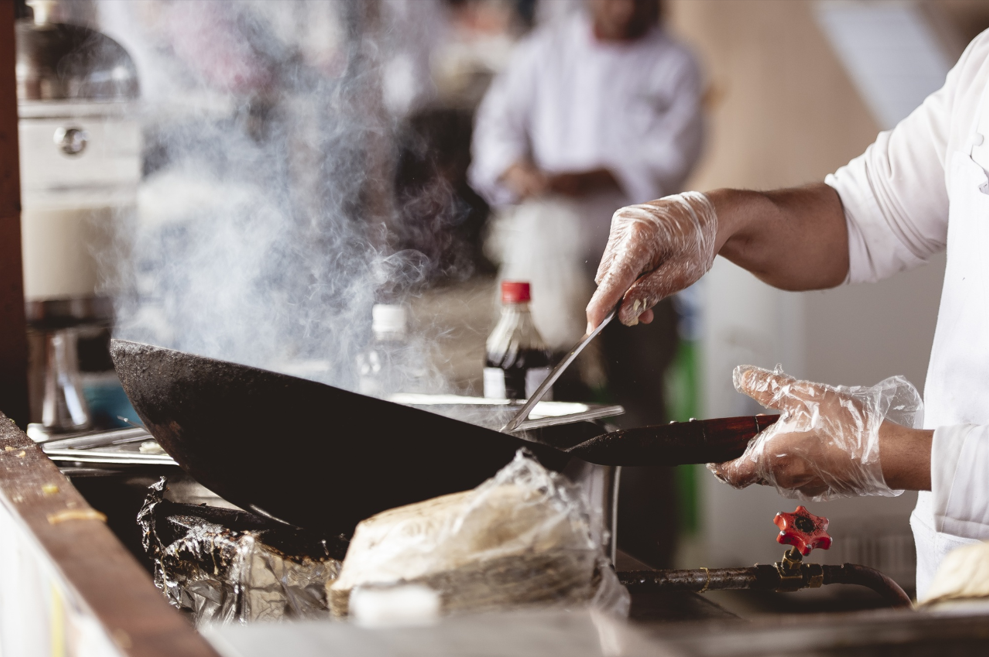
Cloud kitchens operate without dine-in space. No waiters. No décor budgets. No prime-location rentals. Just optimized kitchens built for one purpose: delivery.
Before the pandemic, roughly 20% of restaurant revenue came from delivery. Today, that number is closer to 60–70% for many brands.
When the majority of revenue shifts to delivery, the economics of restaurants change completely.
Why Now? The Perfect Storm
Three forces collided to create this boom.
First, India’s young population demands convenience — 24/7. Late-night cravings, office lunches, weekend indulgence — all ordered through apps.
Second, delivery platforms like Swiggy and Zomato built the digital superhighway. They didn’t just enable delivery — they normalized it.
Third, the economics finally made sense.
Traditional restaurants bleed cash through rent and interiors. Cloud kitchens eliminate that burden. Lower overhead + high delivery demand = potentially stronger margins.
Over the next 8–10 years, the opportunity could scale to ₹20,000–30,000 crore — 3–5x the current size.
The Different Business Models Within Cloud Kitchens
Not all cloud kitchens are built the same.
1. Ghost Restaurants
These are existing restaurant brands using delivery-only formats in new areas. This segment alone is worth around ₹2,500 crore and growing at nearly 40% annually.
It allows established brands to expand without heavy capital expenditure.
2. Independent Cloud Kitchen Chains
These are pure-play delivery brands with no dine-in presence at all. Faster, cheaper, and more agile, this segment is estimated at ₹1,500 crore and growing close to 50% per year.
They experiment quickly, test menus rapidly, and scale what works.
3. Multi-Brand Cloud Kitchens
This is where things get really interesting.
One kitchen. Five to ten brands. Shared infrastructure. Shared staff. Shared rent.
Lower cost per brand. Higher utilization per kitchen.
This is reportedly the fastest-growing segment, expanding at nearly 60% year-on-year.
It’s not just a kitchen. It’s a food factory.
Who’s Winning the Race?
A few major players are already ahead.
Rebel Foods has built a multi-brand empire with names like Faasos, Behrouz Biryani, and EatFit. Operating across multiple cities, it has crossed ₹100+ crore in revenue and continues to expand aggressively.
NextBite focuses on helping brands scale digitally through delivery platforms, riding the Swiggy-Zomato ecosystem.
Then there’s CloudKitchens, which isn’t building food brands — it’s building the infrastructure for others to operate. Think of it as the real estate + backend backbone of the cloud kitchen revolution.
Even established food chains like Wow! Momo now derive over 60% of sales from delivery.
The shift isn’t theoretical. It’s visible in revenue mix.
Why This Isn’t a Fad
Food delivery is no longer occasional convenience.
It’s routine behavior.
Once consumers get used to ordering dinner in 25 minutes, they don’t go back. Convenience becomes default. And businesses that optimize for that behavior win.
Cloud kitchens align perfectly with this new demand pattern:
- Faster setup
- Lower capital requirements
- Scalable across cities
- Data-driven menu decisions
- Higher operating leverage
It’s asset-light expansion in an industry that was traditionally asset-heavy.
The Investment Angle
This isn’t just about food brands.
It impacts:
- Real estate (less demand for large dine-in spaces)
- Logistics & last-mile delivery
- Packaging companies
- FMCG collaborations
- Tech-driven kitchen management systems
The bigger theme? Digitization of consumption.
India’s food industry is moving from experience-first to efficiency-first — and cloud kitchens sit at the center of that transformation.
Final Thought
Restaurants without tables.
Brands without dining rooms.
Customers without patience.
The cloud kitchen revolution is quietly rewriting the rules of the ₹50,000 crore food business.
And we’re still in the early innings.