


India’s Margin Trading Facility (MTF) has crossed ₹1.1 lakh crore+.
In just 4 years, MTF exposure has grown nearly 5X.
Quietly.
Aggressively.
Without a visible stress-tested risk model.
Leverage has scaled faster than liquidity.
Faster than investor understanding.
Faster than risk controls.
And that’s where the danger begins.
What Is Margin Trading Facility (MTF)?
Margin Trading Facility allows investors to:
- Buy stocks by borrowing money from brokers
- Pay a small margin upfront
- Hold leveraged positions for extended periods
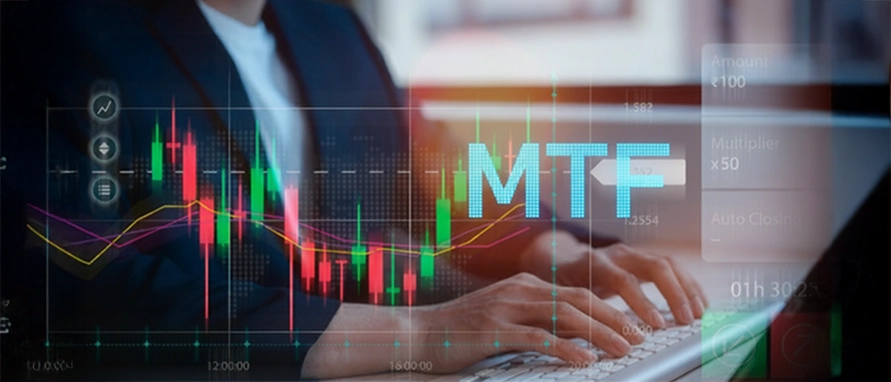
Unlike F&O (Futures & Options), MTF positions can be held for months.
That changes the risk profile completely.
Why MTF Risk Is Different From F&O Risk
Many people compare MTF to derivatives.
That comparison is misleading.
Here’s why.
1️⃣ Long Holding Period
F&O traders usually:
- Trade short-term
- Hedge positions
- Exit quickly
MTF investors:
- Hold positions for months
- Sit through volatility
- Delay exits
When markets fall sharply, exits are not fast.
They become messy.
2️⃣ Massive Stock Universe (~1,300 Stocks)
MTF lending covers nearly 1,300 stocks.
Many of them:
- Have low liquidity
- Are midcap or smallcap
- Move sharply during corrections
In normal markets, this feels safe.
In panic markets, liquidity disappears.
And when everyone runs for the same exit…
Prices collapse faster than expected.
3️⃣ Mostly One-Way Bets
MTF is mostly used for long positions.
There is:
- No natural hedge
- No counter-position
- No offsetting trade
In F&O markets, there are buyers and sellers.
In MTF crashes, there are only sellers.
That’s the structural weakness.
Where Is the Real Exposure?

Let’s look at index-level exposure.
Nifty 50
MTF Exposure: ~18%
CAGR (long-term): 11–13%
Nifty Midcap 150
MTF Exposure: ~41%
CAGR: 17–19%
Nifty Smallcap 250
MTF Exposure: ~41%
CAGR: 19–21%
The highest leverage is in:
- Midcaps
- Smallcaps
And these are also the most volatile segments.
High beta + high leverage = amplified downside risk.
What Happens During a Market Shock?
Let’s break it down step-by-step.
1️⃣ Stock starts falling
2️⃣ Margin call triggered
3️⃣ Investor fails to add capital
4️⃣ Broker force-sells position
5️⃣ More selling pressure hits market
6️⃣ Prices fall further
7️⃣ More margin calls
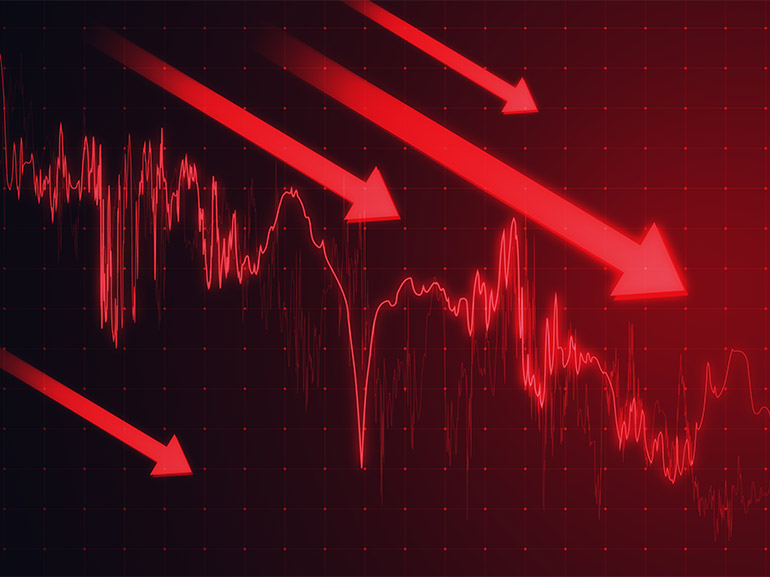
This becomes a chain reaction.
A forced liquidation cycle.
Small and illiquid stocks turn into traps.
Why This Risk Is Growing Now
Leverage works beautifully in bull markets.
Rising prices hide risk.
But currently:
- Market stability is weakening
- Liquidity conditions are tightening
- Volatility is increasing
Yet leverage continues to rise.
MTF has grown faster than:
- Liquidity growth
- Risk management frameworks
- Investor education
That imbalance is dangerous.
Who Bears the Real Risk?
Retail investors.
When markets fall sharply:
- Retail gets margin calls
- Forced selling destroys capital
- Valuations collapse rapidly
Brokers are protected through collateral systems.
But market confidence suffers.
Leverage doesn’t create risk in bull markets.
It exposes it in bear markets.
Is an MTF Implosion Inevitable?
Not necessarily.
But risk probability increases when:
- Leverage concentration rises
- Liquidity narrows
- Retail participation peaks
- Valuations stretch
India’s equity culture is still evolving.
And excessive leverage without proper risk modelling can amplify corrections.
Key Takeaways for Investors
✔ Avoid overleveraging in mid & smallcaps
✔ Understand liquidity before using MTF
✔ Keep emergency capital buffer
✔ Never ignore margin call risk
✔ Don’t treat leverage as free money
Bull markets reward confidence.
Bear markets punish leverage.
Final Thought
₹1.1 lakh crore+ MTF exposure is not small.
It is a structural variable.
In the next sharp correction:
- Forced unwinds in illiquid stocks
- Chain reactions
- Fast valuation resets
Could create temporary market instability.
Leverage doesn’t look dangerous when markets are green.
It looks invisible.
Until it isn’t.