

Quick Summary
A REIT is a trust that owns income-generating commercial properties, such as office spaces, malls, warehouses and business parks, which allows investors to buy a share of that portfolio through listed units. This article provides an overview of what REITs are, the various types of REITs in India, how to invest in them and their key advantages and limitations.
Introduction
For many of us, owning a piece of real estate feels like an ultimate milestone. It is something we dream about for security, pride and long-term wealth. However, given the current cost of living and the ever-rising inflation, this dream remains quite out of reach for a significant portion of our population, even in a growing economy. But there is a middle ground to owning a property without burning through your life savings in the process or getting into heavy debt. The answer comes in the form of REITs.
What Are REITs
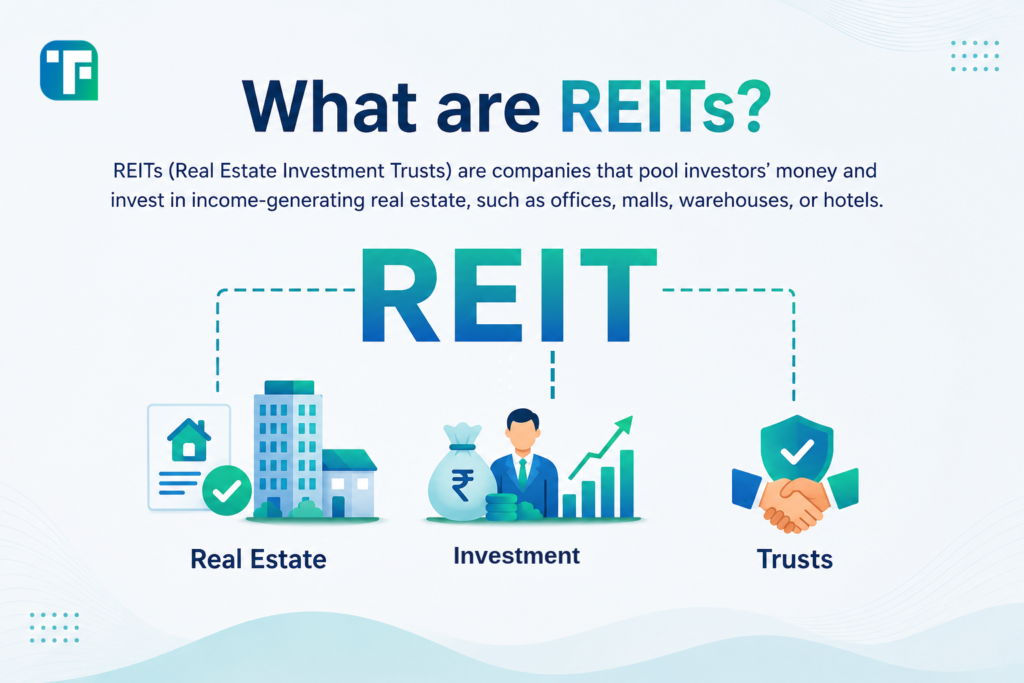
A REIT or Real Estate Investment Trust is a trust that pools money from investors and uses it to purchase and manage commercial income-generating property. Instead of owning a physical property, an investor buys units of the REIT, much like buying shares of a company. The REIT collects rent from its properties and passes on most of that income to unit holders at regular intervals. Because REITs are listed on stock exchanges, they can be bought and sold just as easily as any other listed security.
What Are the Different Types of REITs
REITs can be classified in two ways, based on how they are regulated and based on how they generate returns.
By the SEBI Regulatory Structure, There Are 2 Types
Mainboard REITs: These are the original and larger REITs regulated since 2014. They typically hold a diversified portfolio of large commercial properties and are meant for investors who want exposure to well-established, income-generating assets.
SM REITs: Small and Medium REITs are a newer category introduced to regulate smaller or single-property investment structures. They allow investors to put in a smaller amount of money to gain exposure to a specific property or a small group of properties, making real estate investing more accessible.
By Investment Strategy, There Are 3 Types
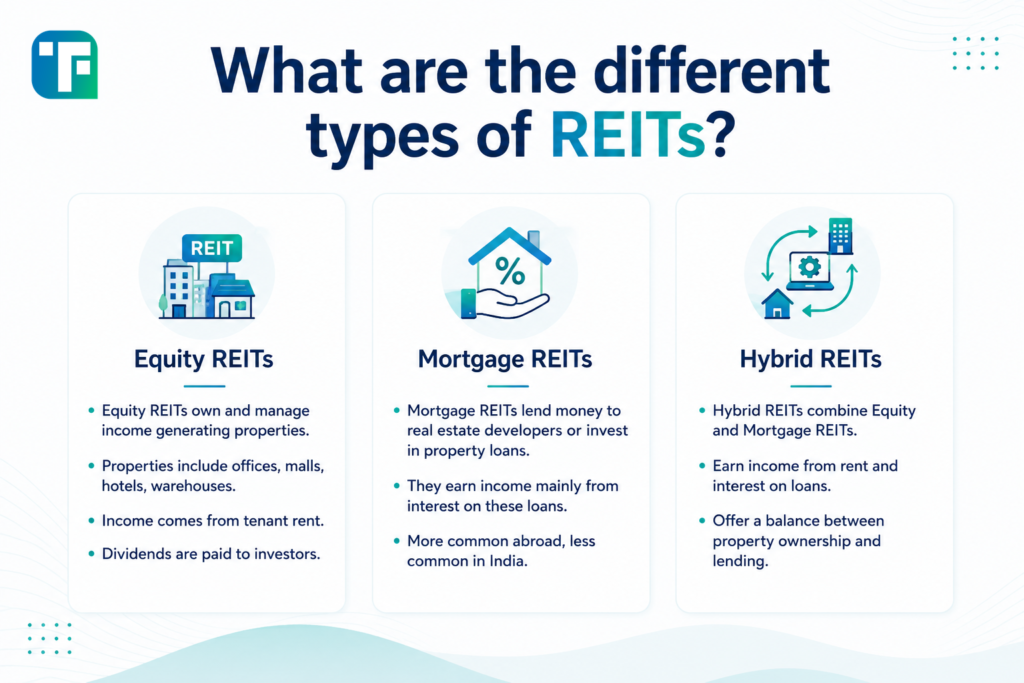
Equity REITs: These REITs own physical properties directly and earn income primarily from rent. Most REITs in India, including all the mainboard ones, fall into this category.
Mortgage REITs: Instead of owning property, these REITs invest in real estate loans and mortgages, earning income from the interest paid on them.
Hybrid REITs: As the name suggests, hybrid REITs combine both approaches, holding a mix of physical properties and real estate debt.
How to Invest in REITs
There are two common ways to invest in REITs.
The first is to buy units directly on the stock exchange, the same way you would buy shares of a company. This requires a demat account and gives investors direct ownership of REIT units, along with direct exposure to their price movements and payouts.
The second is to invest indirectly through mutual funds that hold REITs as part of their portfolio. Several mutual funds in India now include REIT exposure, either as a dedicated allocation or as part of a broader real estate or diversified equity strategy. This route can be useful for investors who prefer a more diversified approach rather than picking individual REITs.
Advantages and Limitations of REITs
Like any investment option, REITs come with their own set of benefits and drawbacks that are worth weighing before investing.
Advantages
Steady Income: REITs are required to distribute the majority of their rental income to unit holders at regular intervals, making them a reliable source of income for investors.
Liquidity: Since REITs are listed on stock exchanges, investors can buy or sell units easily, unlike physical property, which can take months to sell.
Diversification: A single REIT often holds multiple properties across different locations and tenants, which spreads out the risk compared to owning one physical property.
Professional Management: REITs are managed by experienced teams who handle leasing, maintenance, and property operations, so investors do not have to get involved in the day-to-day running of the assets.
Limitations
Market Volatility: Since REIT units are traded on stock exchanges, their prices can fluctuate with overall market sentiment, sometimes independent of how the underlying properties are actually performing.
Tax Implications: Income from REITs can be taxed differently depending on how it is earned, whether through interest, dividends or capital gains, which can make tax filing a bit more involved compared to simpler investments.
Interest Rate Sensitivity: REIT prices and yields tend to be sensitive to changes in interest rates, since investors often compare REIT returns to other income-generating options like bonds and fixed deposits.
Conclusion
REITs give investors in India an easy and affordable way to invest in high-quality real estate without needing huge capital or dealing with the hassles of property ownership. They provide regular income, high transparency and liquidity through stock exchanges, making them a strong alternative to traditional real estate. Like any other investment option, they do have some limitations. However, REITs remain a regulated, low-cost and convenient option for investors looking to diversify their portfolio and earn steady returns from India’s growing commercial real estate sector.
Disclaimer: This article is for informational purposes only and does not constitute investment advice. Investments are subject to market risks. Investors should consult a registered financial advisor before making any investment decisions.