

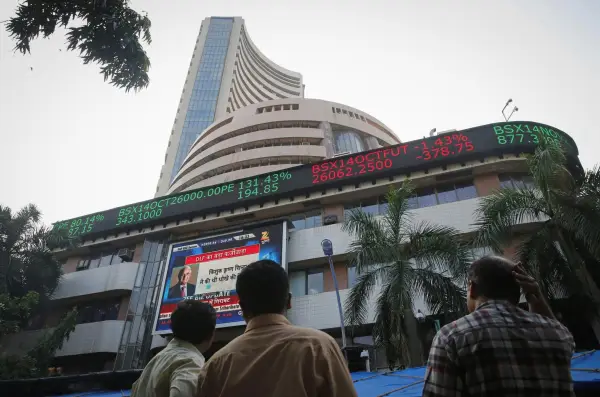
For the first time in over three decades, Indian equities are significantly underperforming broader emerging markets.
In USD terms:
- MSCI India: ~+2%
- MSCI Emerging Markets: ~+30%
- MSCI Asia ex-Japan: ~+26%
The gap is striking.
India — long considered the structural outperformer — is suddenly lagging.
The question investors are asking: Is this cyclical pain… or structural weakness?
Foreign Investors Are Selling Aggressively
Foreign Institutional Investors (FIIs) have pulled out over $16 billion in 2025 so far — making it one of the largest foreign equity outflows on record.
Why is capital leaving?
Two major reasons:
1. India as a Funding Trade
With relatively higher valuations, India has been used as a source of liquidity to fund allocations elsewhere.
2. Capital Rotation to China & Korea
Markets like China and South Korea are rallying on artificial intelligence and semiconductor themes. Investors are chasing:
- AI infrastructure
- Chip manufacturing
- Deep value re-rating

India, in comparison, lacks a strong AI-led large-cap theme driving global capital excitement.
And in global markets, narratives matter.
Slower Earnings + Weak Rupee = Double Pressure
Fundamentals have also softened.
- FY26 earnings growth estimates have been cut to ~10%.
- The Indian rupee has fallen nearly 5% year-to-date.
- It breached the psychological 90 per dollar level.
- India’s trade deficit has expanded to around $282 billion.
A weakening currency amplifies foreign investor losses in USD terms — further discouraging inflows.
When earnings momentum slows and currency weakens simultaneously, global capital turns cautious.
Why Emerging Markets Are Winning
Emerging market peers are benefiting from:
- Valuation re-rating from low bases
- Strong AI and semiconductor narratives
- Recovery trade optimism

Historically, India and China rarely rally together. Global fund managers often rotate capital between them depending on macro cycles and valuation gaps.
Right now, the pendulum has swung toward other Asian markets.
Is the Worst Behind Us?
Here’s where the story gets interesting.
Despite underperformance, several internal indicators suggest stabilization may be near:
- Inflation is at a 10-year low.
- Earnings downgrade cycles appear close to bottoming.
- Domestic SIP flows remain strong and consistent.
- Some global investment banks are turning overweight on India again.
Domestic liquidity has become a powerful structural support for Indian markets — a major difference compared to past cycles.
And markets tend to turn when sentiment is most pessimistic.
The Bigger Lesson
Capital is never static.
It rotates.
Money moves from expensive to cheap. From crowded trades to under-owned markets. From momentum to value — and back again.
India’s long-term structural story — demographics, digitalization, formalization, manufacturing push — remains intact.
Short-term underperformance doesn’t erase structural strengths.
It simply resets valuations.
Final Takeaway
Yes, this has been one of the worst phases of relative underperformance in decades.
But bad phases rarely last forever.
If inflation remains contained, earnings stabilize, and capital rotation normalizes, India could move from laggard to leader again.
Markets reward patience — not panic.
The real question isn’t whether India underperformed.
It’s whether this underperformance is setting up the next cycle.