

The next 24 hours could significantly shift market sentiment.
Two major U.S. events are unfolding almost back-to-back:
- A U.S. Supreme Court decision on Trump-era tariffs
- The latest U.S. unemployment data release
Individually, each event matters. Together, they could reshape how investors think about growth, recession risk, inflation, and interest rates.
Here’s why this window is unusually sensitive.
Event 1: The US Supreme Court Tariff Decision
The Supreme Court of the United States is set to decide whether certain Trump-era tariffs were legally imposed.
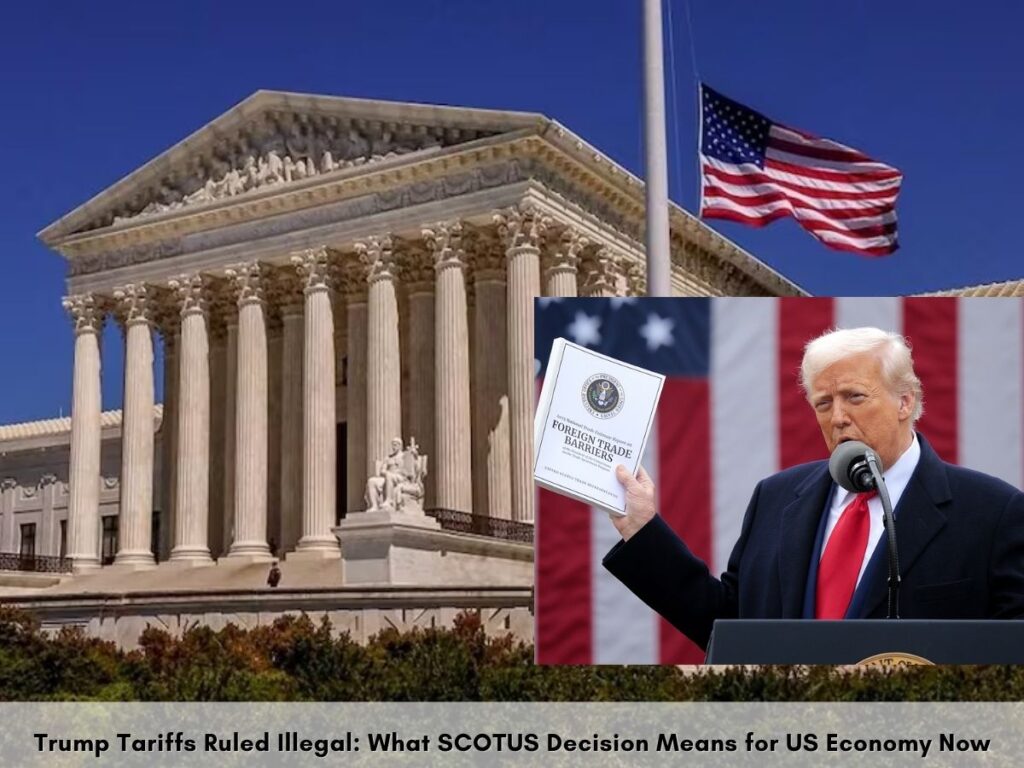
These tariffs, introduced under former President Donald Trump, have collected over $600 billion in revenue and have influenced pricing across multiple sectors.
If Tariffs Are Struck Down:
- The U.S. government may need to refund a substantial portion of previously collected tariff revenue.
- Pricing structures across industries could be disrupted.
- Investor confidence may weaken due to policy uncertainty.
Even though the U.S. administration has alternative mechanisms to impose tariffs, those tools are slower and less aggressive. That delay creates uncertainty — and markets dislike uncertainty more than almost anything else.
The concern isn’t just about trade.
It’s about policy credibility and economic stability.
Event 2: US Unemployment Data
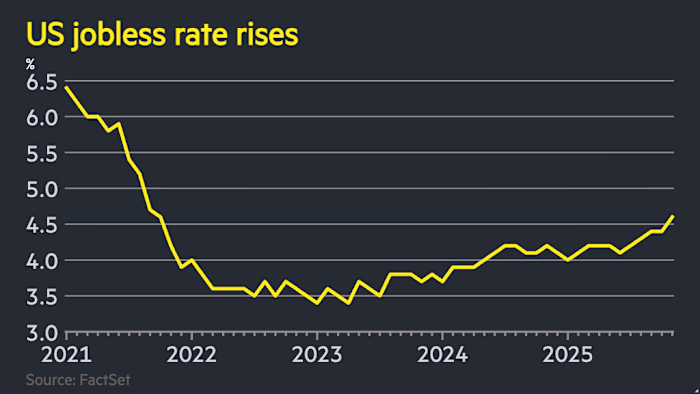
At the same time, the latest U.S. unemployment report will offer fresh insight into the health of the world’s largest economy.
This data has direct implications for interest rate expectations.
Here’s the dilemma:
- Higher unemployment → Rising recession fears
- Lower unemployment → Strong economy, but fewer or delayed rate cuts
Markets are currently pricing in very limited rate cuts going forward. That means there’s little margin for surprise.
If the labor market shows weakness, recession anxiety could spike.
If it shows strength, investors may have to accept “higher rates for longer,” which pressures equities and risk assets.
Either way, volatility increases.
Why These Events Together Matter
Normally, markets digest macro events one at a time.
But here, investors are simultaneously dealing with:
- Trade policy uncertainty
- Government revenue implications
- Economic growth signals
- Interest rate expectations

This creates a compressed decision window where sentiment can shift quickly.
Tariff uncertainty affects corporate earnings and inflation expectations.
Unemployment data affects Federal Reserve policy assumptions.
Combined, they directly influence:
- Equity markets
- Bond yields
- The U.S. dollar
- Commodities
- Crypto markets
This is not just a U.S. issue. Global markets react to U.S. macro signals in real time.
What This Means for Investors
The next 24 hours represent a high-risk window for short-term traders.
Expect:
- Elevated volatility
- Quick narrative shifts
- Possible knee-jerk reactions
For long-term investors, the key is not to panic — but to understand the macro backdrop.
This is a positioning moment, not necessarily a portfolio overhaul moment.
Short-term pain can emerge from policy uncertainty. But structural trends remain intact unless fundamentals materially change.
Bottom Line
The combination of a Supreme Court tariff ruling and critical labor market data creates a rare convergence of legal, economic, and monetary risk.
Markets don’t just move on numbers.
They move on expectations.
And over the next 24 hours, those expectations may reset.
Be prepared. Manage risk. Avoid emotional decisions.
Because when macro uncertainty compresses into a single window, volatility follows.